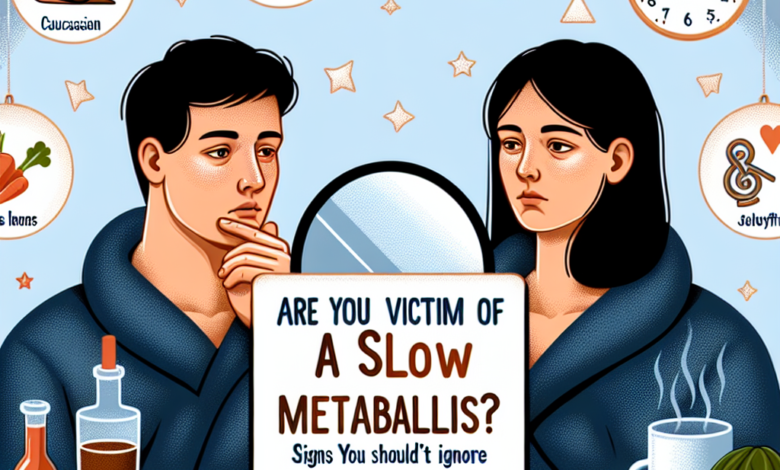
Are You a Victim of a Slow Metabolism? Signs You Shouldn’t Ignore
Your metabolism is the process by which your body converts what you eat and drink into energy. A slow metabolism can mean that your body is not burning calories efficiently, which can lead to weight gain and a host of other health issues. Here are some signs that you might be dealing with a slow metabolism.
Signs of a Slow Metabolism
- Unexplained Weight Gain: If you find yourself gaining weight without making any significant changes to your diet or activity level, this could be an indication of a slower metabolism.
- Fatigue: Constant tiredness or a lack of energy, even after a full night’s sleep, may suggest that your body’s metabolic processes are sluggish.
- Sensitivity to Cold: A feeling of being cold when others are comfortable may be a sign that your metabolism isn’t generating enough heat.
- Difficulty Losing Weight: If you’re putting in the effort to lose weight but not seeing results, your metabolic rate could be lower than normal.
- Dry Skin and Hair: A slow metabolism can affect hormonal and nutrient balance, leading to dry skin, hair loss, or brittle hair.
- Digestive Issues: If you often experience bloating, constipation, or other digestive problems, a slow metabolism may be to blame.
What Causes a Slow Metabolism?
Several factors can contribute to a slow metabolism, including:
- Age: As we age, our muscle mass tends to decline, resulting in a slower metabolism.
- Genetics: Your genetic makeup can influence your metabolic rate.
- Hormonal Imbalance: Conditions such as hypothyroidism can significantly slow down metabolism.
- Poor Diet: Diets high in sugar, fat, and processed foods can negatively impact metabolic function.
- Lack of Physical Activity: A sedentary lifestyle can lead to a decrease in muscle mass and a slower metabolism.
What Can You Do?
If you suspect that you have a slow metabolism, there are several lifestyle changes you can make:
- Increase Physical Activity: Incorporate regular exercise, particularly strength training, which can help build muscle mass and boost metabolism.
- Eat a Balanced Diet: Focus on whole foods, including fruits, vegetables, lean proteins, and healthy fats.
- Stay Hydrated: Drinking enough water is essential for optimal metabolic function.
- Manage Stress: Chronic stress can impact hormones that regulate metabolism, so consider stress management techniques such as yoga or meditation.
- Consult a Healthcare Professional: If symptoms persist, consider consulting a doctor or nutritionist for personalized advice.
Conclusion
Being aware of the signs of a slow metabolism is crucial for taking proactive steps toward improving your health. If you recognize these signs in yourself, it may be time to explore lifestyle changes or seek professional advice. Remember, taking small, consistent steps can lead to significant improvements over time.